



Heavy Civil Rock Removal & Blasting Case Studies
Since 1992, Palmetto Rock has handled rock removal projects across the Southeast. From power generation plants to commercial developments and utility infrastructure, our portfolio includes heavy civil rock excavation projects that demand precision.
Combined Cycle Power Generation Project in Person County
The Roxboro Plant expansion called for controlled blasting support within a compressed heavy-civil schedule:
- Industry/vertical: Power generation
- Project type: Combined-cycle power facility site development
- Service: Controlled blasting
- Location: Person County, North Carolina
The new combined cycle facility will include two hydrogen-capable natural gas turbines with a planned combined capacity of 2,720 MW. Added to the technical complexity was the high volume of rock at the building site, making this a heavy-civil construction project.
How We Handled It
Our strategy relied heavily on orchestration and meticulous attention to detail. We maintained coordination across the project to keep design, sequencing, and scheduling aligned. After conducting a geotechnical evaluation, our team engineered a unique blast pattern designed to meet grade.
The Result
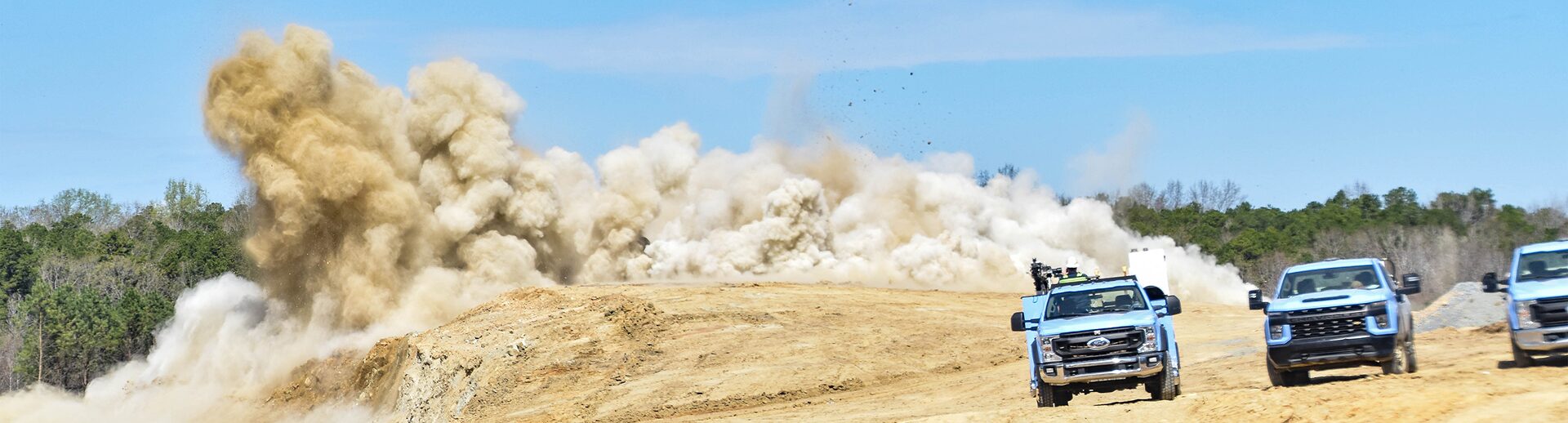
Palmetto Rock engineered a controlled blasting approach that released enough energy to fracture the underlying formations while keeping vibrations within regulatory limits. This Person County Combined Cycle project is an example of how we execute controlled blasting under complex parameters, on schedule.
Subaru Parking Lot Commercial Development Project
Subaru’s parking lot expansion required civil rock removal near active infrastructure:
- Industry/vertical: Commercial site development
- Project type: Parking lot excavation adjacent to active infrastructure
- Service: Controlled blasting
- Location: Spartanburg, South Carolina
The project required blasting near housing, major roads, and community establishments. Our team was also working around utilities running through and around the mass rock excavation zone.
How We Handled It
The urban infrastructure near the project site meant we needed tools that could afford us millisecond-level blasting control. The answer was our electronic detonators engineered to help us steer the blast energy without affecting the nearby structures. For civilian safety, our team had to close off the worksite to prevent trespassing. We also used blasting mats to contain the work area and further minimize the blast’s impact.
The Result
While some members of the Spartanburg community paused to watch from the Blue Moon Bodega parking lot, we kept the project otherwise uneventful. From the underground utilities to the surrounding community establishments, the surrounding infrastructure remained unaffected. For Subaru, we became the execution partner that could operate safely in high-traffic and high-visibility commercial environments.
Conyers Substation Utility Infrastructure Project
Georgia Power’s Conyers facility expansion required drilling and controlled blasting beside an active substation:
- Industry/vertical: Utility infrastructure
- Project type: Blasting adjacent to a live, active electrical substation
- Service: Drilling and controlled blasting
- Location: Conyers, Georgia
This rock removal project was particularly complex due to its proximity to live, high-voltage transmission lines, where any disruption carried safety and service risks.
How We Handled It
The Georgia Power project demanded meticulous site preparation and highly accurate vibration monitoring. To comply with environmental regulations while successfully executing the project, our team used the electronic initiation system engineered to deliver precise and controlled blasts.
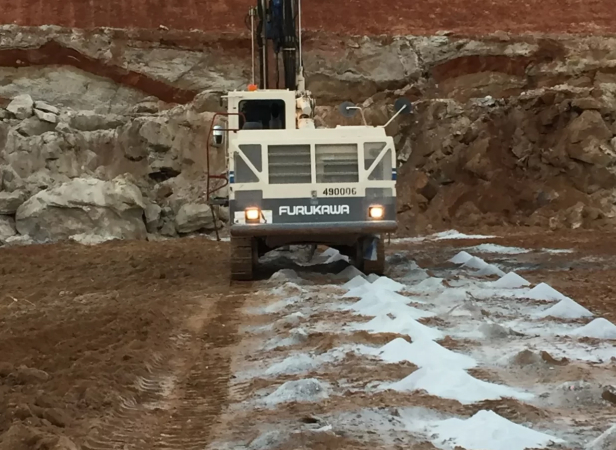
This ultra-sensitive environment also meant that our team had to employ unique techniques, such as Swiss cheesing, meaning this project demanded both drilling and blasting. This approach helped our team maintain the lowest possible vibration limits for the site.
The Result
We executed the project without disrupting the live utility operations or compromising the substation or transmission infrastructure. We operated within a few feet of utility structures without incident.


Testimonials
I’ve worked with the Palmetto Rock team for over 10 years and have never had issues with the quality. Regardless of a project’s needs, I know that we will be happy with their professionalism and quality of work.

I am confident in my recommendation of Palmetto Rock. Their professionalism is exemplary, their safety is excellent, and their performance has always met or exceeded our expectations.

Palmetto Rock performed a large scale blasting project on our site that had some unique challenges with no issues. They were knowledgeable and professional while on-site and displayed teamwork while interfacing with multiple groups on the project.